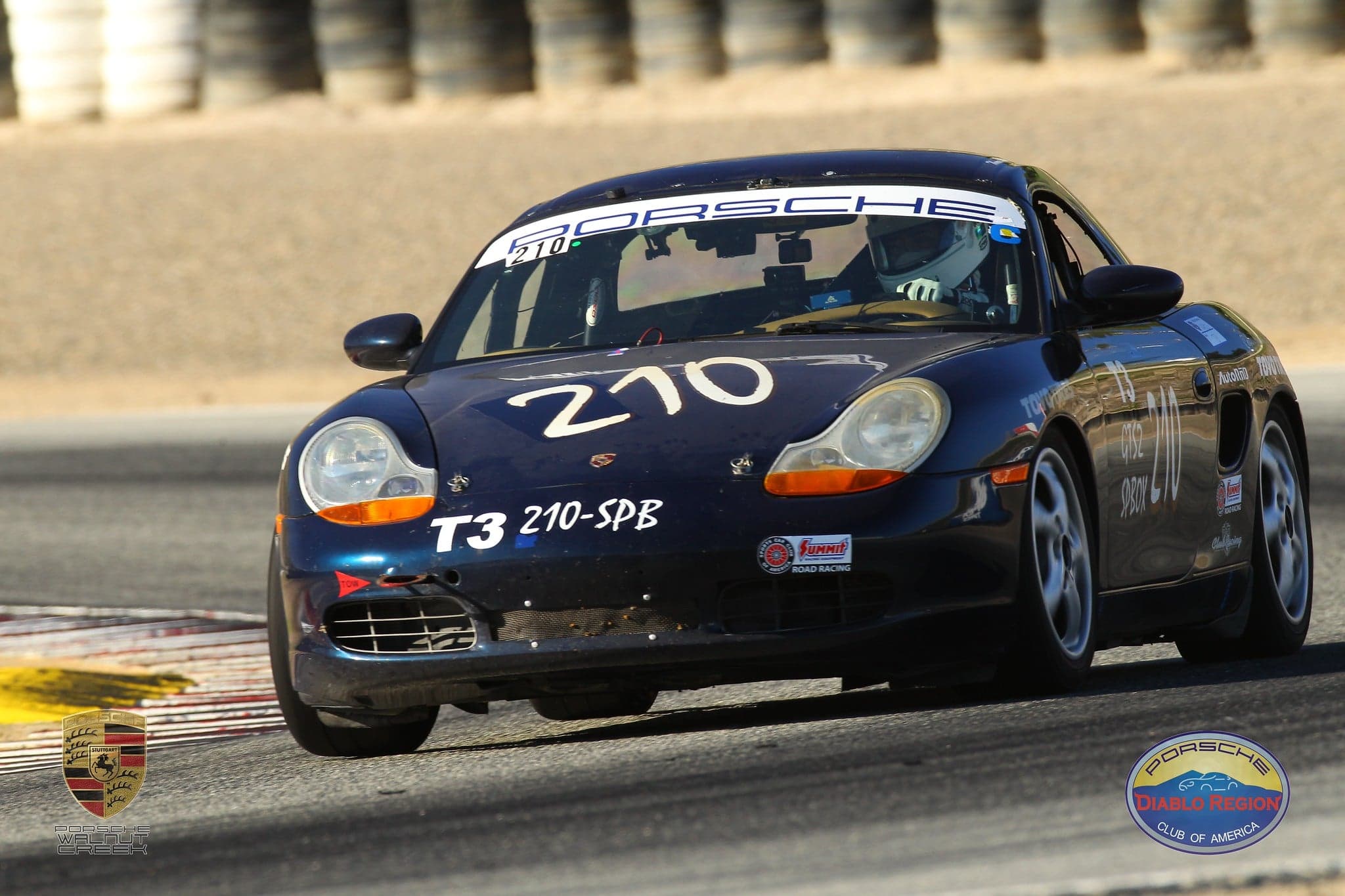

Tom’s Porsche 986 Spec Boxster
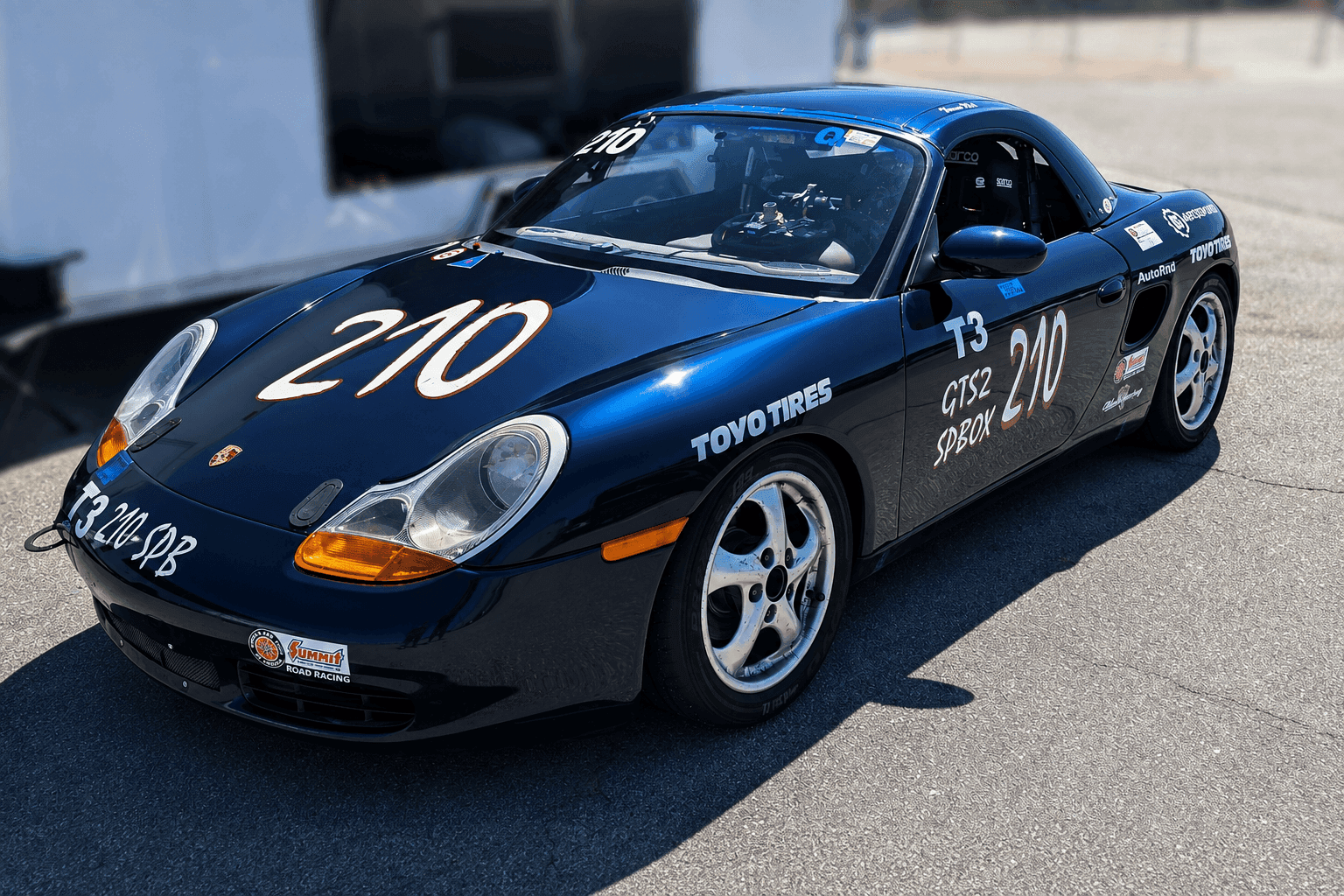
Tom brought me his 986 Spec Boxster with a list of things he wanted taken care of before getting it back on track.
The original list was pretty simple. Install a new Lifeline fire suppression system, fix a leaking transmission oil cooler line, replace a leaking power steering pump, swap the hood pins over to AeroCatch latches, and add some protection for the radiators.
I also wanted to go through the car and see where things could be cleaned up and where some unnecessary weight could come out.
Once I started digging into it, I found quite a bit more.
The muffler had come loose and was beating itself up, one of the undertrays was damaged, and the wiring was honestly pretty rough.
That wiring ended up turning into a pretty big part of the build.
Starting With the Wiring
Like most race cars that have been around for a while, stuff had just been added over the years.
A new gauge gets installed, then another sensor gets tapped into that, then somebody adds another switch, and after a while you have wiring going everywhere.
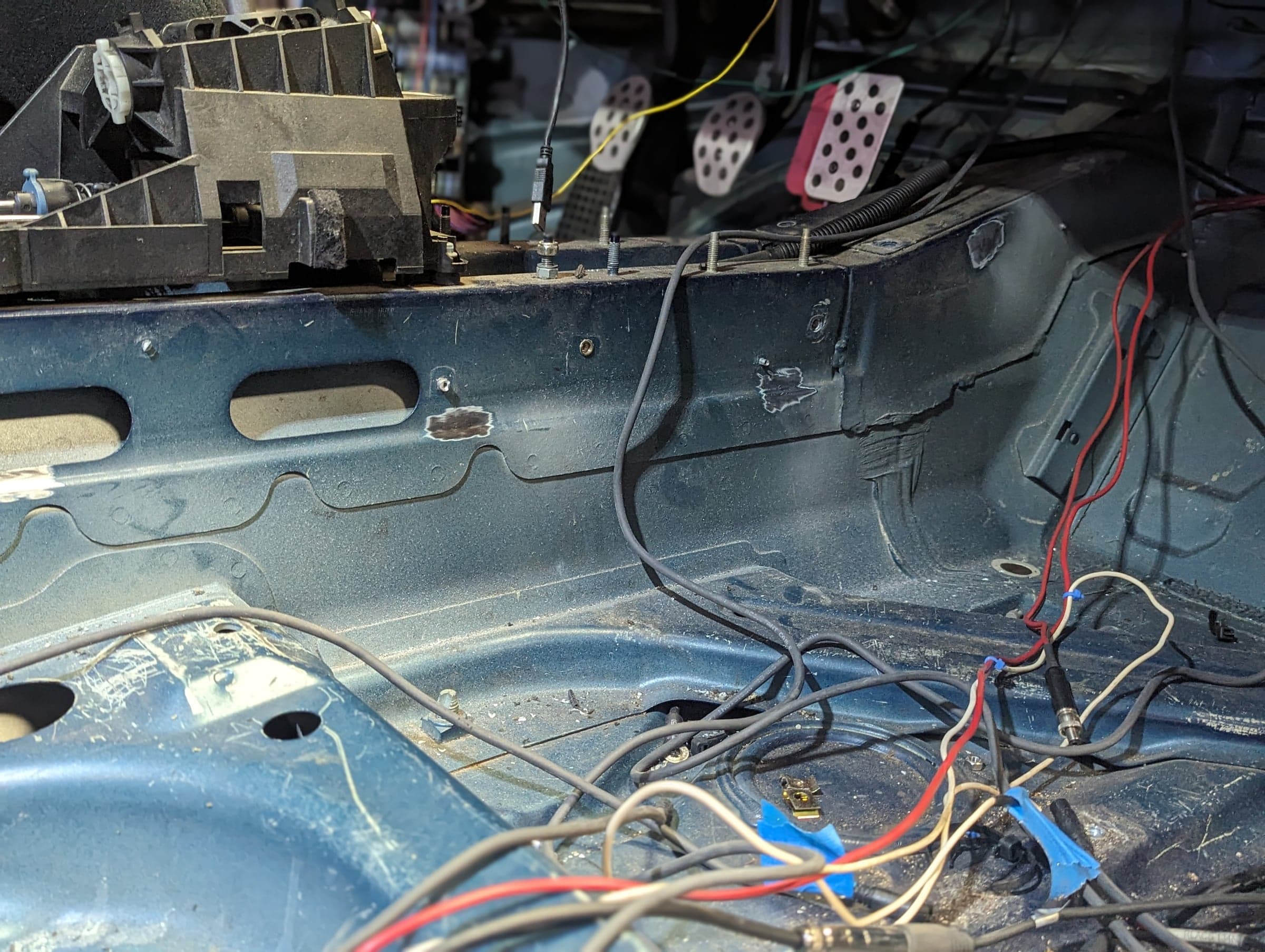
There were wires that weren't secured, taps on top of taps, stuff routed poorly, and just a lot of wiring that didn't need to be there anymore.
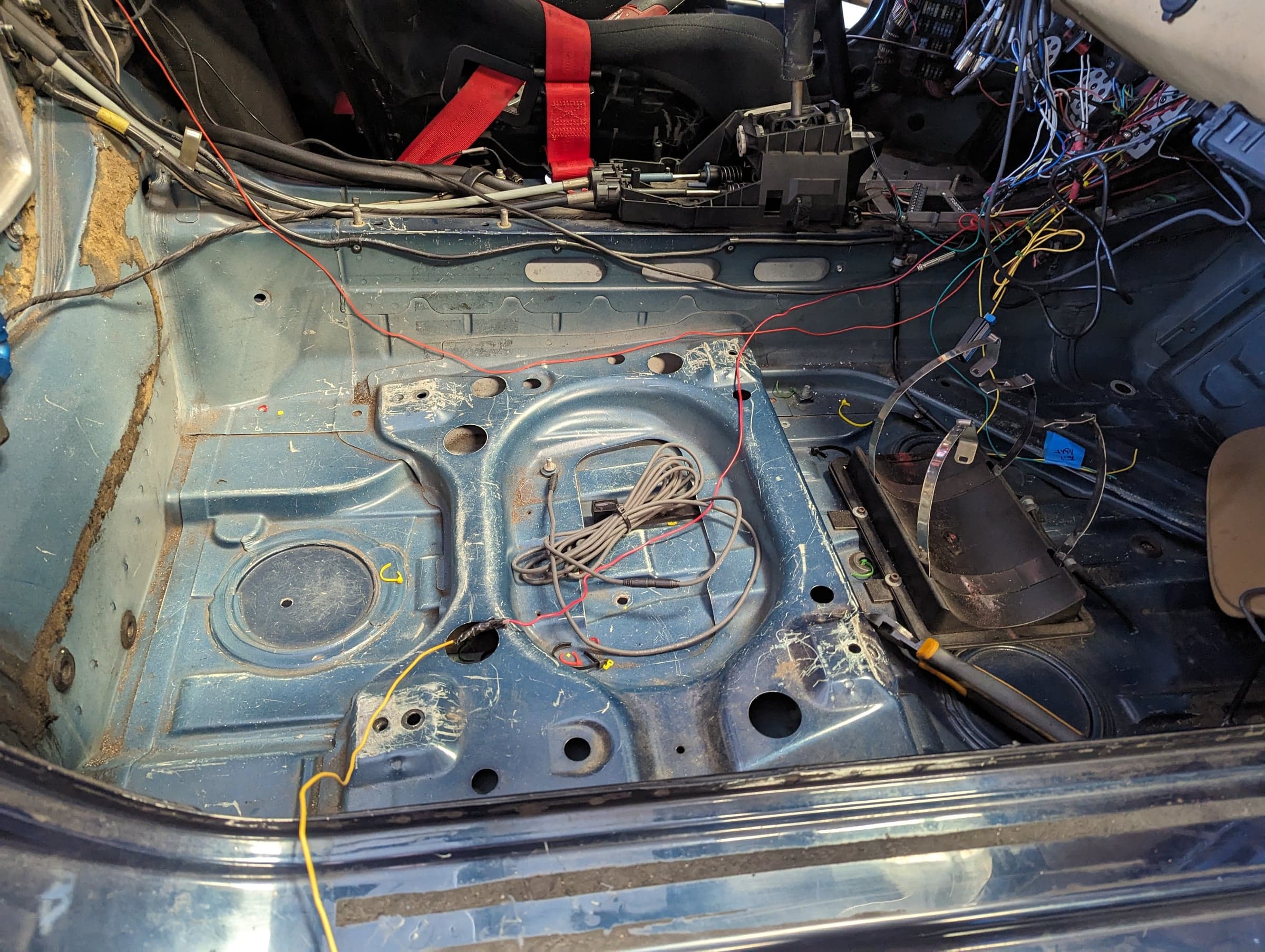
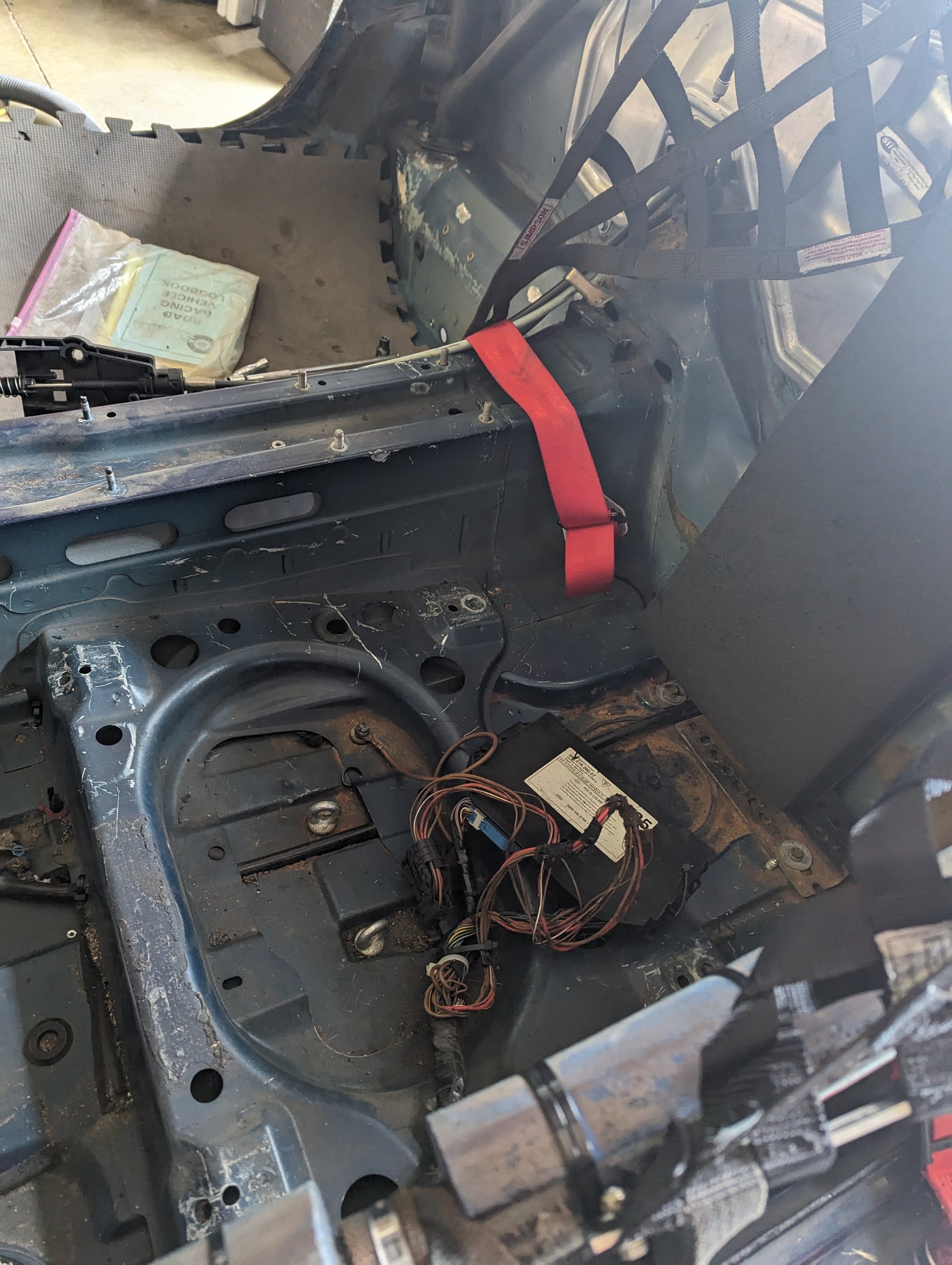
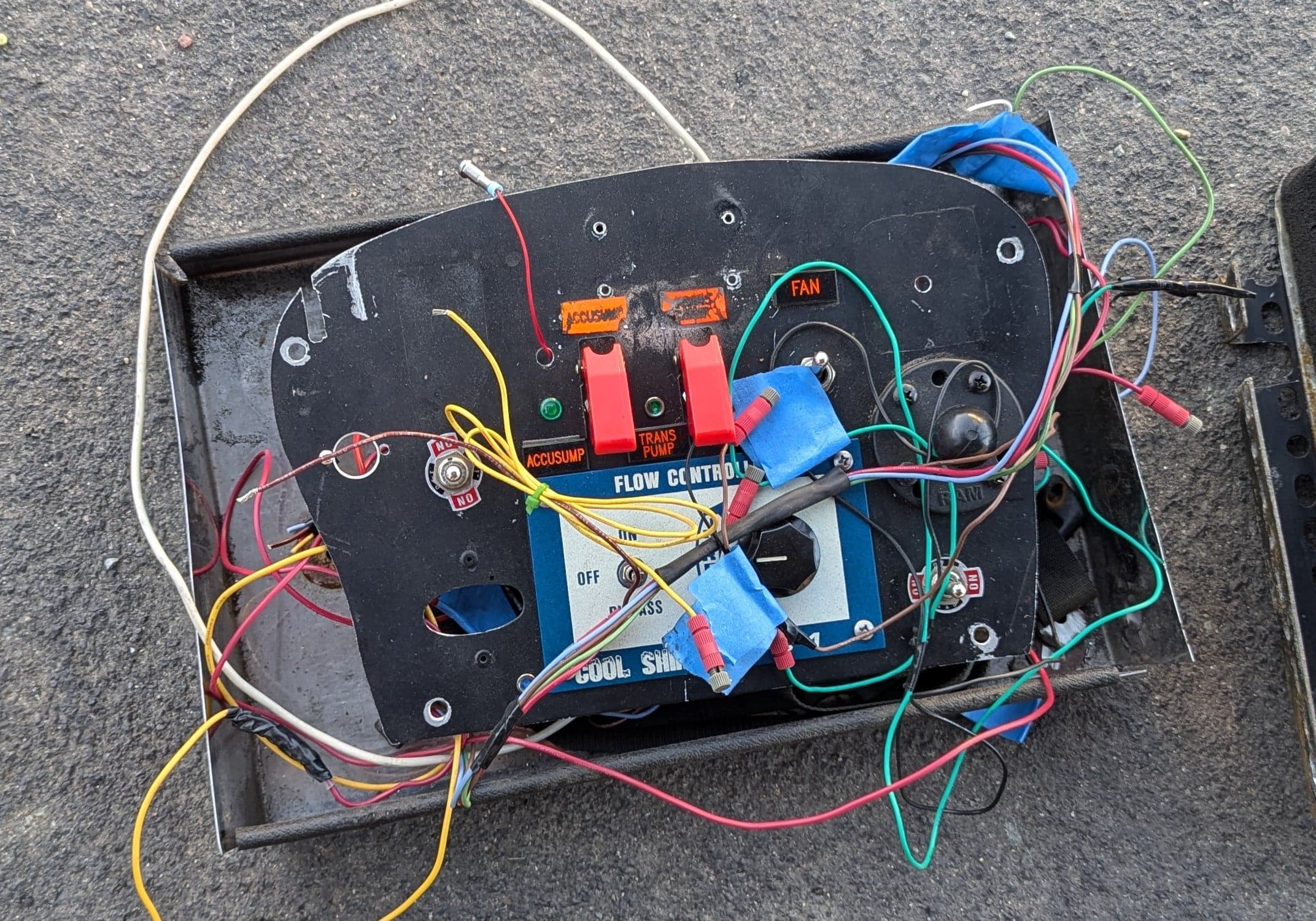
Instead of trying to add more stuff into that mess, I basically ripped out all of the non-factory wiring and started over.
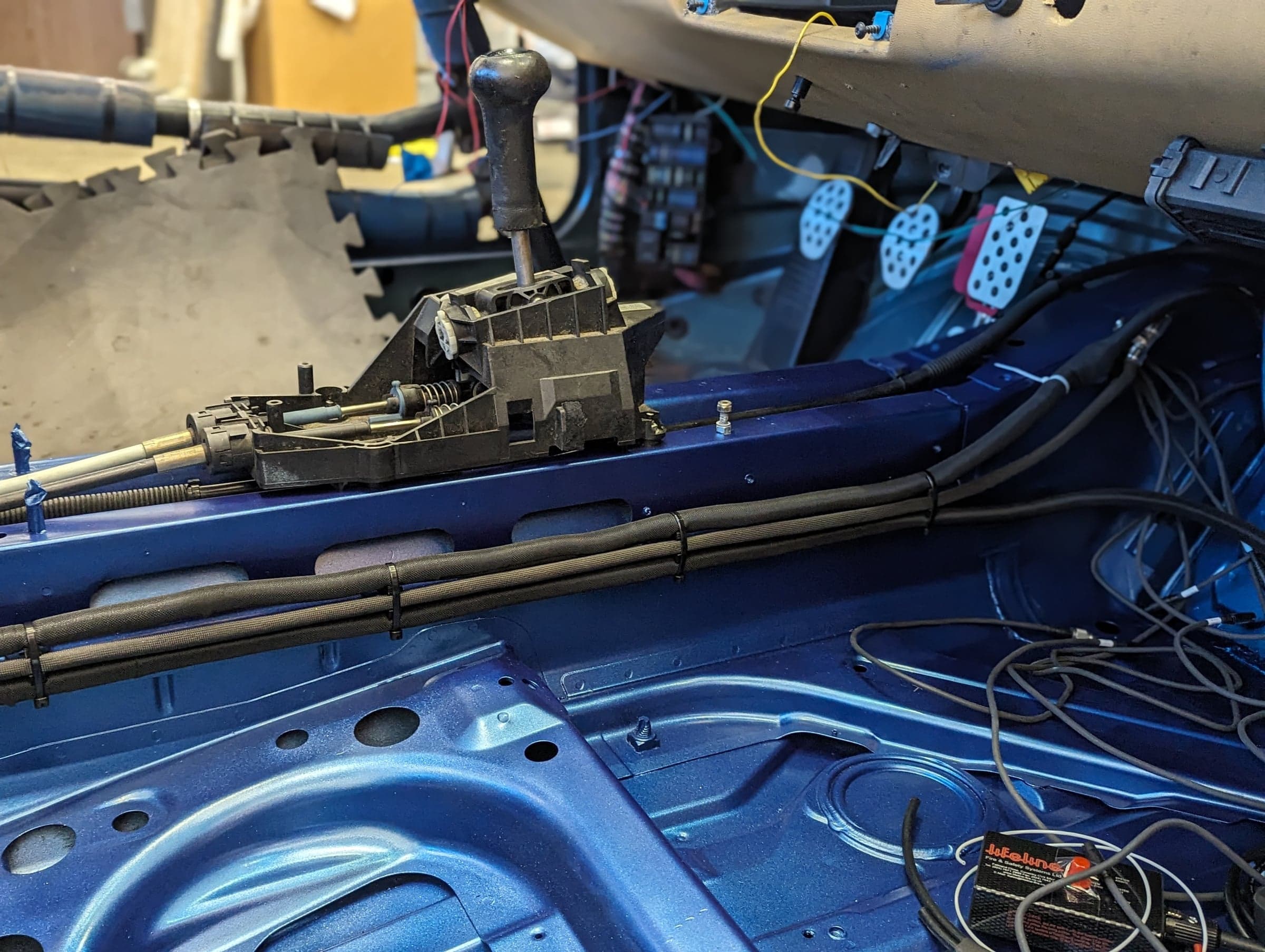
Anything factory that was staying got identified and labeled. I welded in new tabs throughout the interior so there were proper places to secure the harness instead of just zip tying everything wherever it would fit.
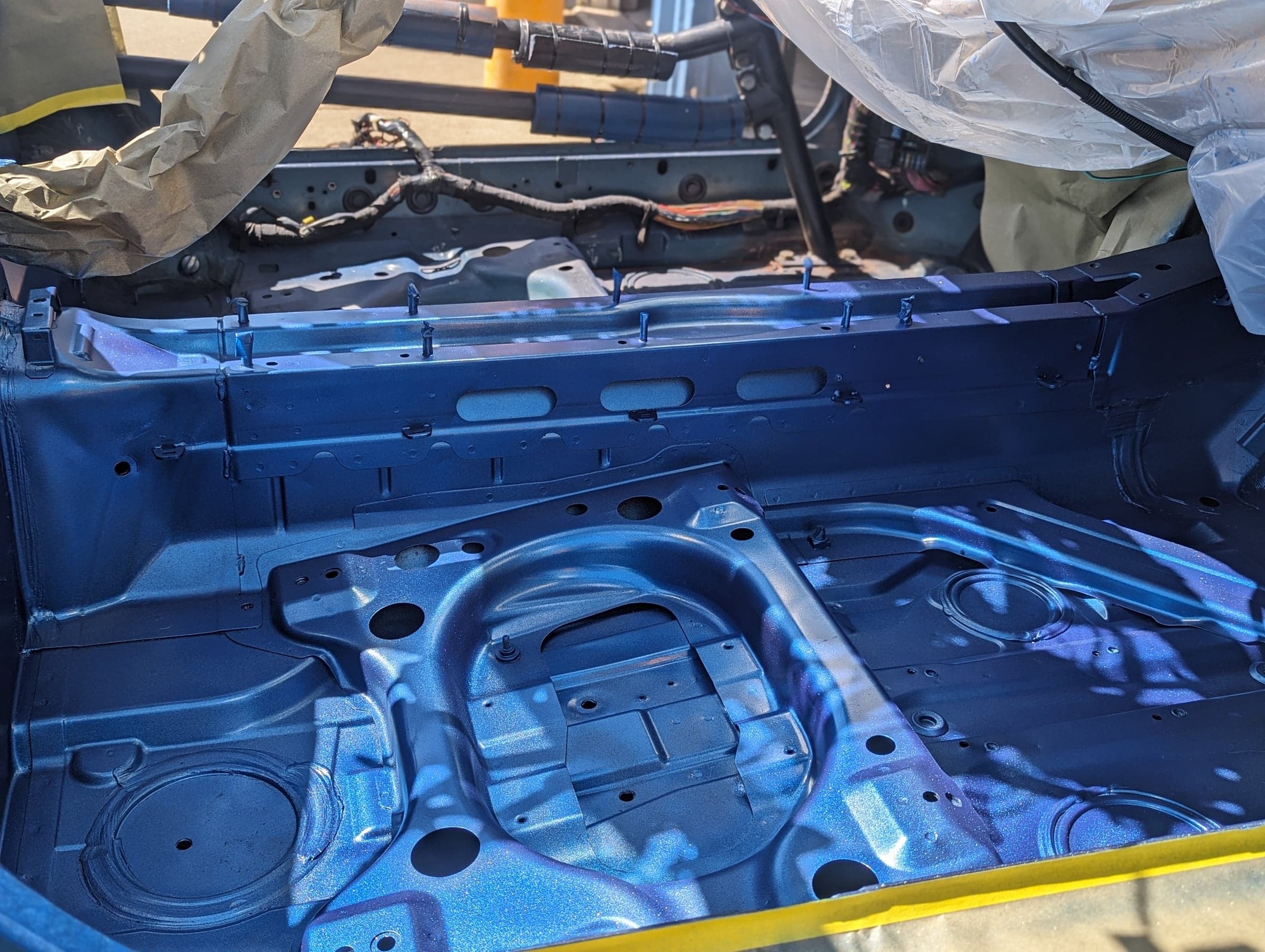
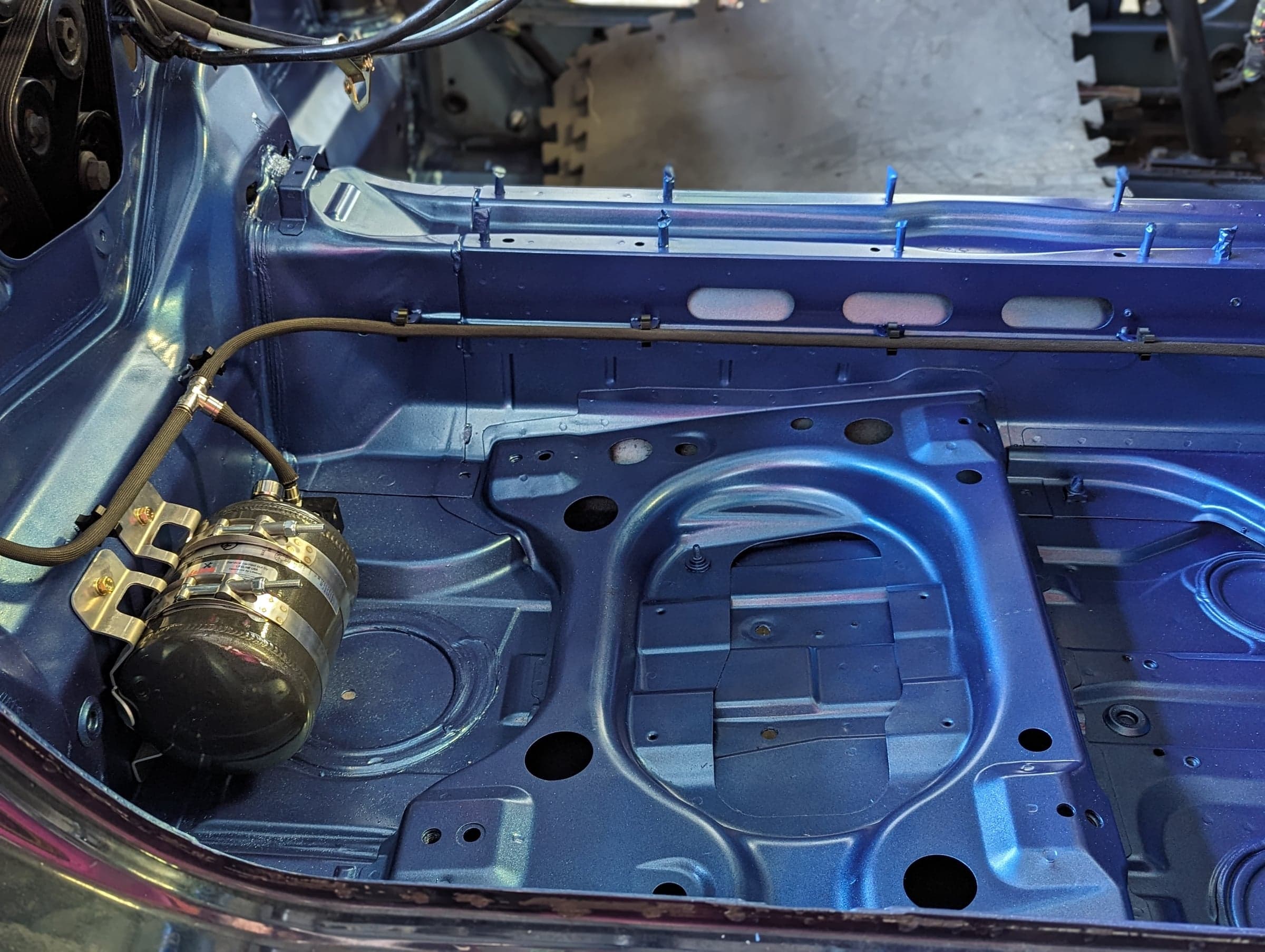
With all of the old wiring out, I took the opportunity to really clean up the interior before everything went back together. The bare areas were cleaned, prepped, and finished in fresh metallic blue, which made a huge difference in how the whole car looked once the new wiring and electronics started going back in.\
It was a lot of work for something most people will probably never notice, but now if there's ever an electrical issue at the track, the wiring actually makes sense and can be followed without figuring out ten years of previous modifications first.
AIM MXP Dash
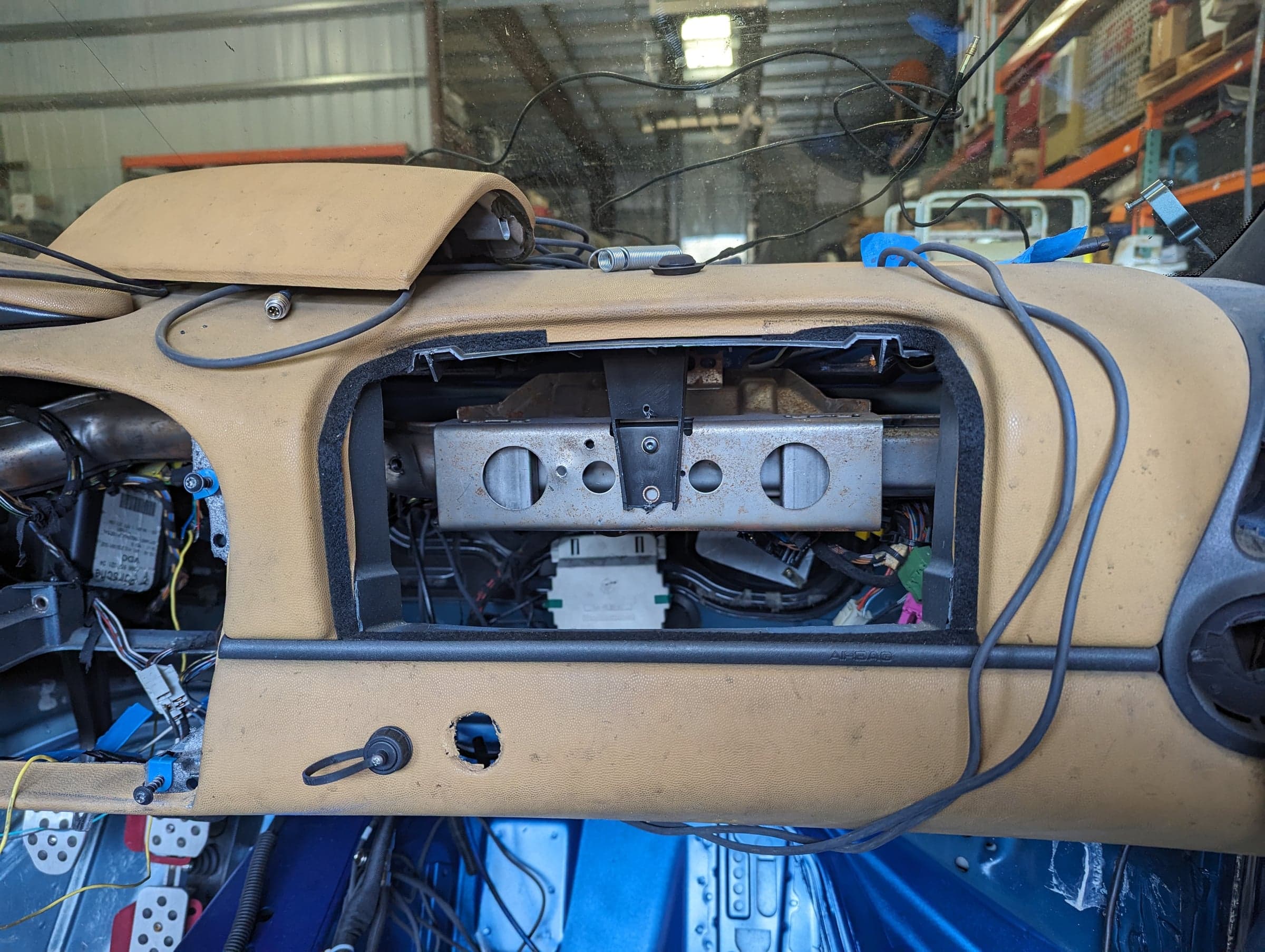
The car already had an AIM MXP installed, but the mounting setup was pretty bad.
It was mounted to a thin dash insert, so every time you pushed one of the buttons the whole thing would move around. The buttons also weren't particularly easy to reach while strapped into the car.
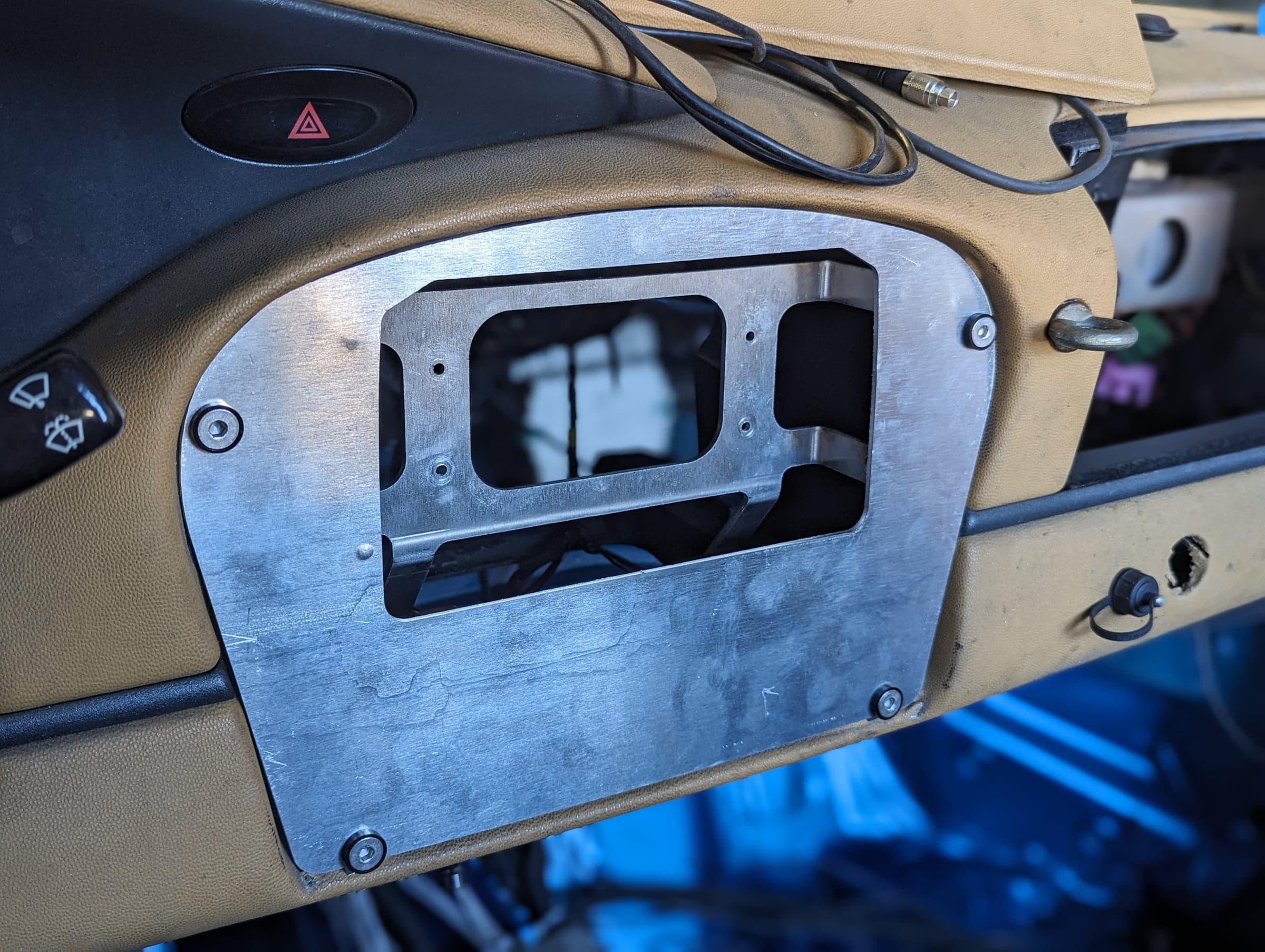
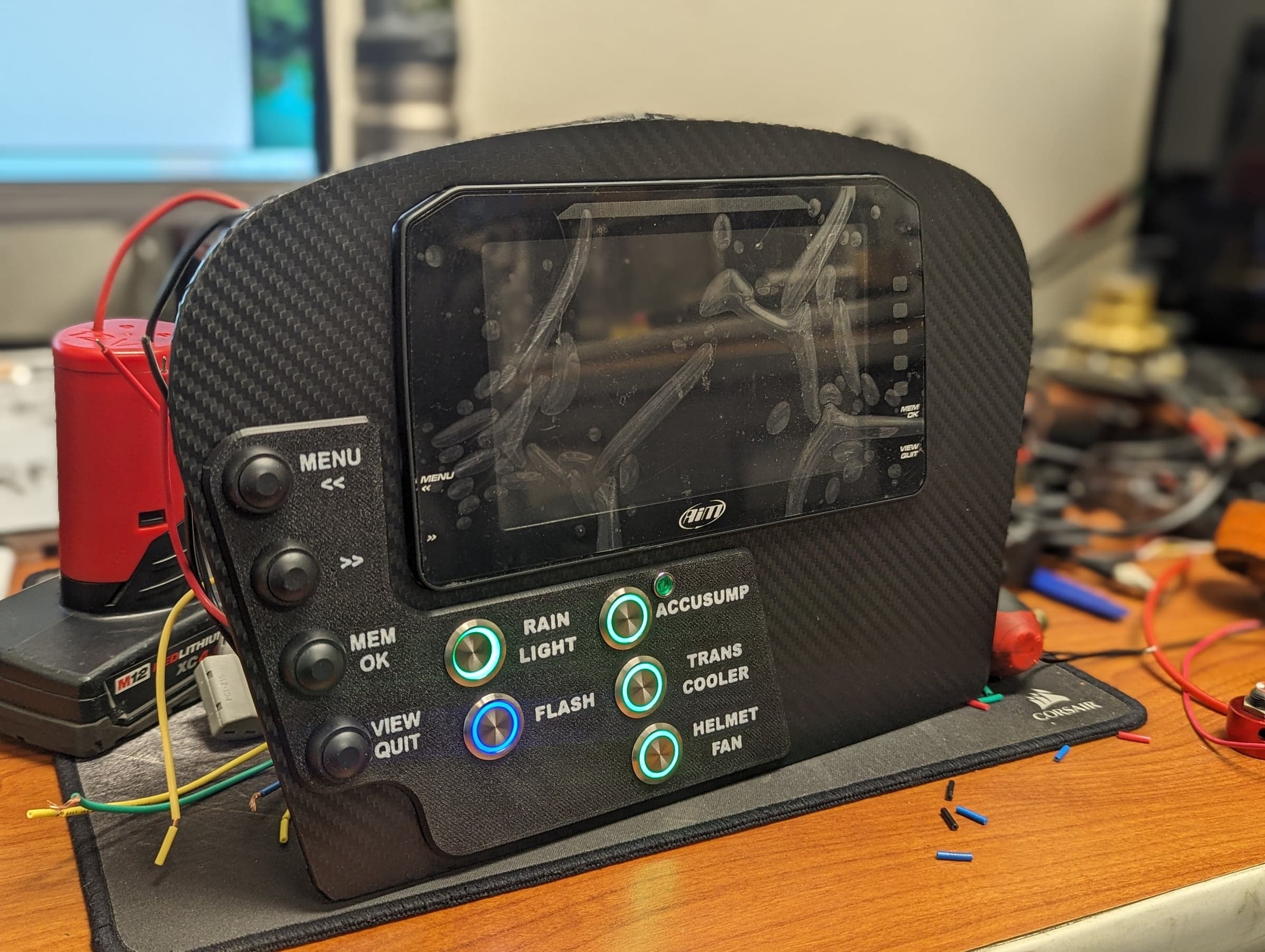
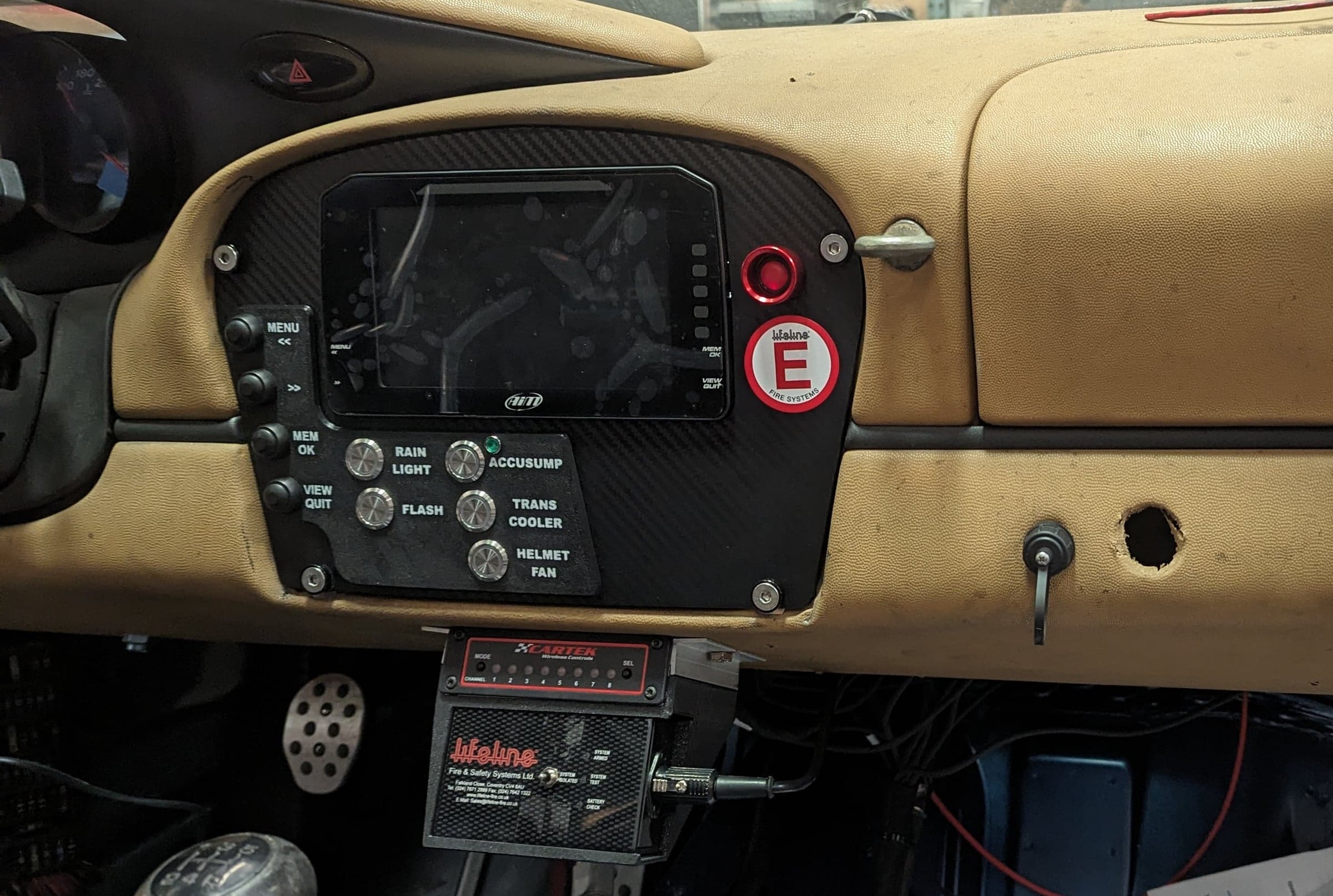
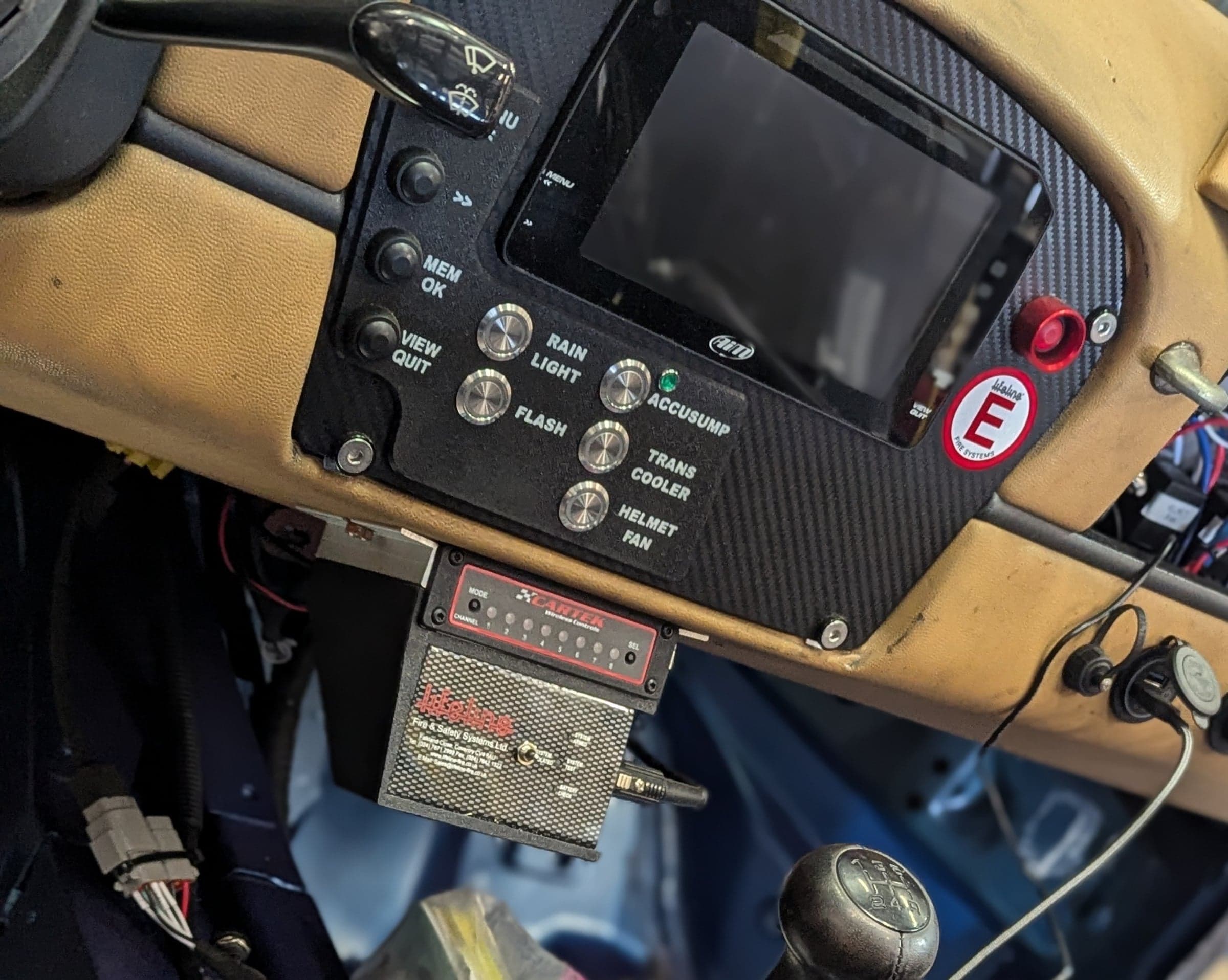
I designed a new laser-cut aluminum dash panel with the AIM mount built into it.
That got rid of all the movement and gave me a much better place to mount everything else.
The panel was wrapped in carbon fiber vinyl and an AIM external button module was added with four buttons right on the dash.
Another four controls were added to the steering wheel using a Cartek wireless setup.
Those handle the AIM controls, radio PTT, traction control and a few of the other things Tom actually needs while driving.
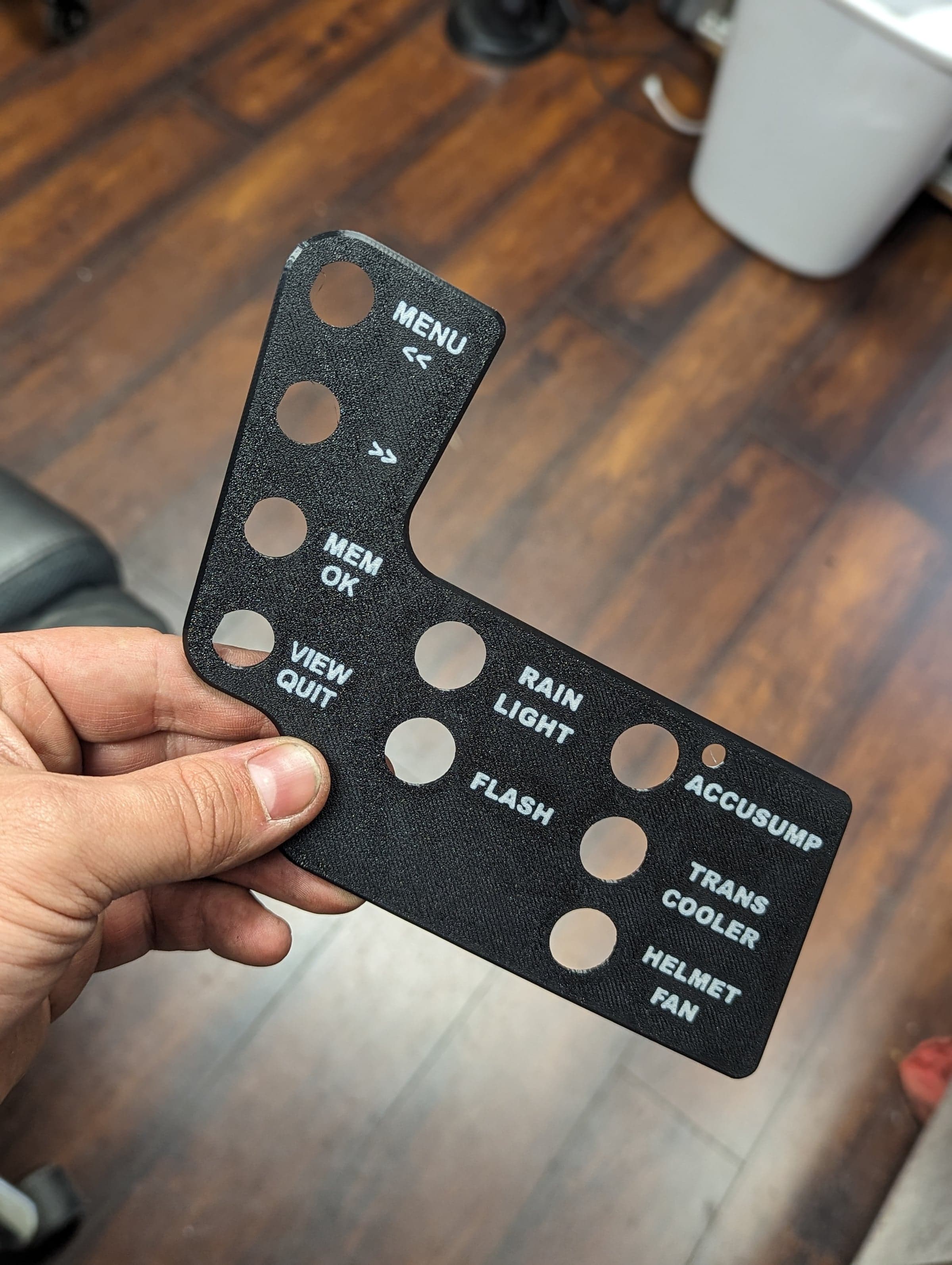
I also designed and 3D printed a small fascia around the controls so everything is labeled and it doesn't just look like a bunch of random buttons stuck to the dash.
Under-Dash Electronics
Once everything was torn apart, it didn't make much sense to leave the rest of the electronics the way they were either.
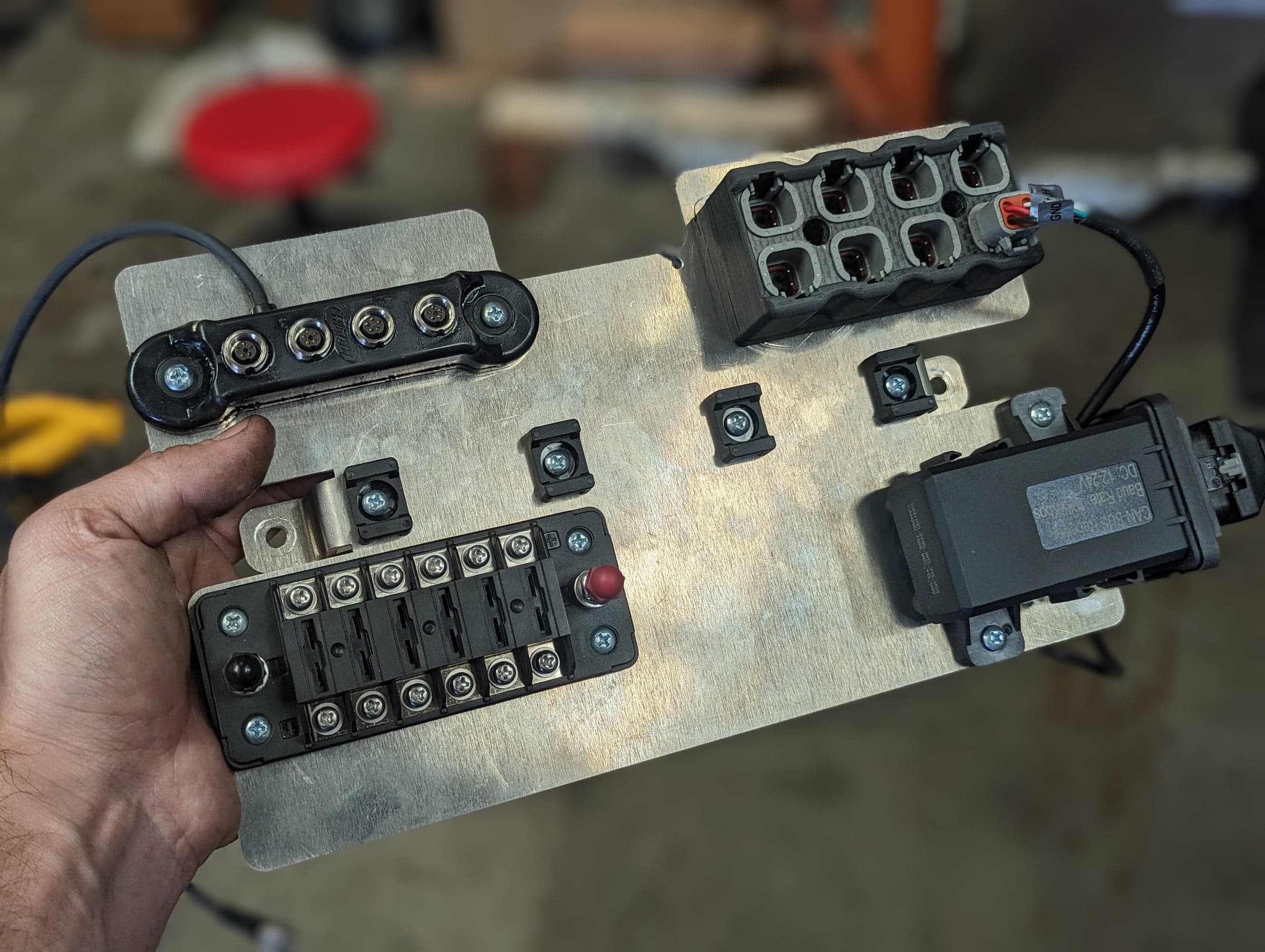
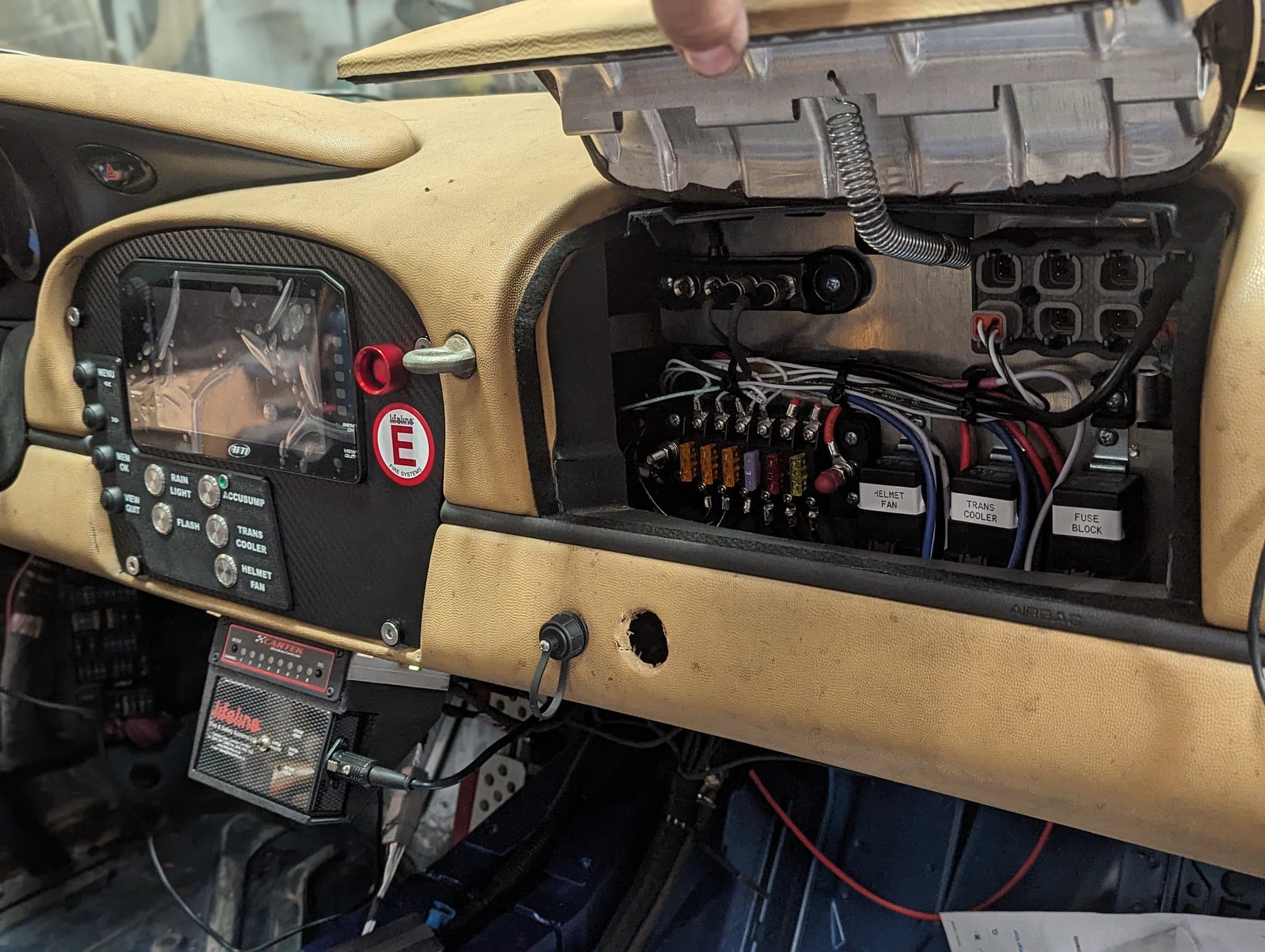
I made another laser-cut aluminum panel underneath the glovebox to mount everything to.
That gave the fused power distribution, AIM expansion module, CANchecked 8-port hub, TPMS module and the rest of the electronics one proper place to live instead of having everything scattered around under the dash.
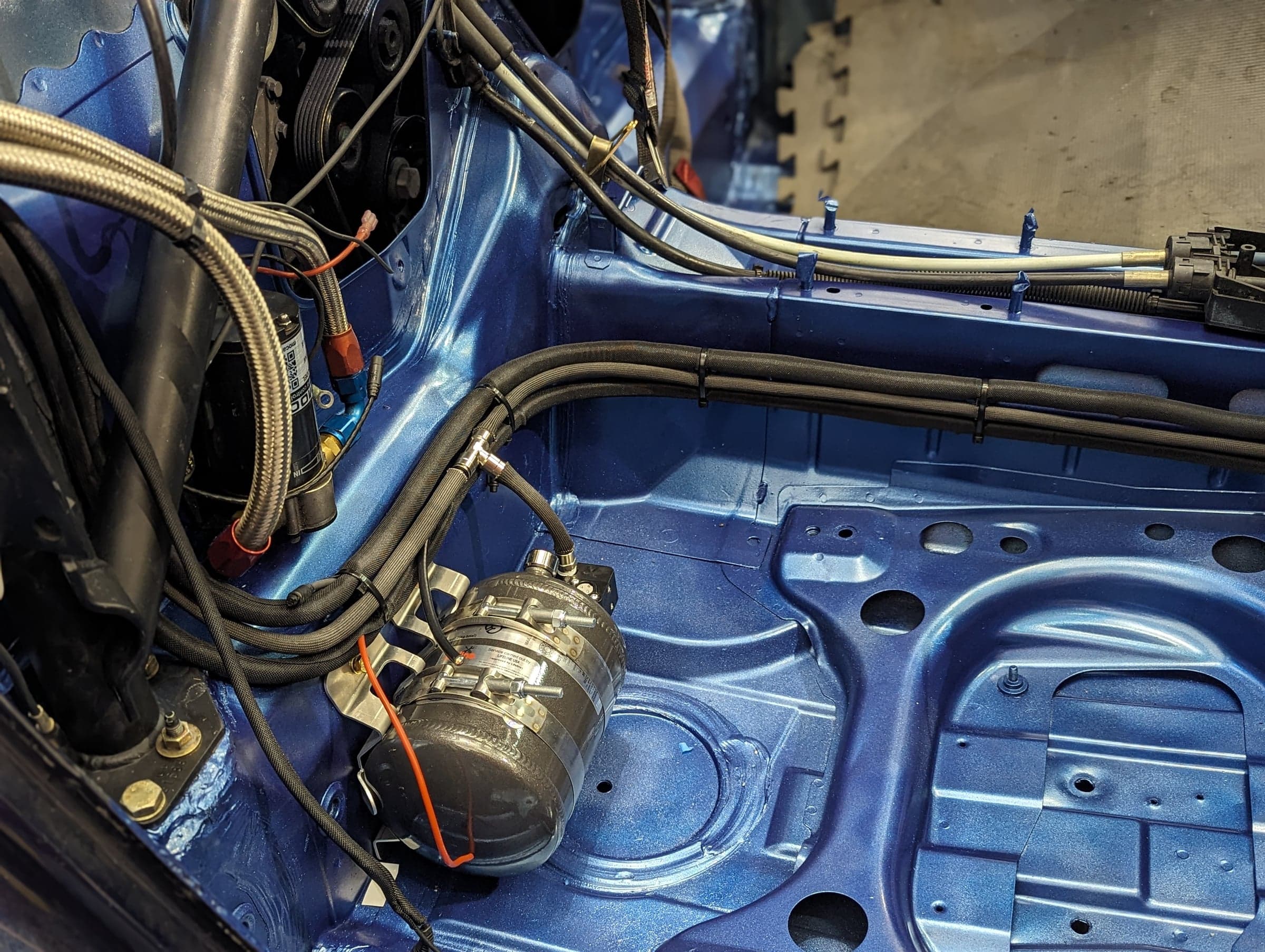
The AIM sensor harness got completely cleaned up and re-loomed, then secured to the new mounting tabs.
I also went through the Cartek battery isolator wiring.
The grounding wasn't great and some of the wiring was way heavier than it needed to be, so that all got redone while everything was apart.
None of this stuff really makes the car faster on its own, but it makes a huge difference when you're actually trying to maintain a race car.
Adding Some More Data
Since the car already had the AIM system, I added a couple of sensors that would actually be useful.
Brake rotor temperature sensors were added so there was real data on what the brakes were doing during a session.
I also added a fuel pressure sensor.
Fuel pressure is one of those things you hopefully never need to look at, but if something starts going wrong with the fuel system, it's really nice to have the data there before finding out the hard way.
Lifeline Fire System
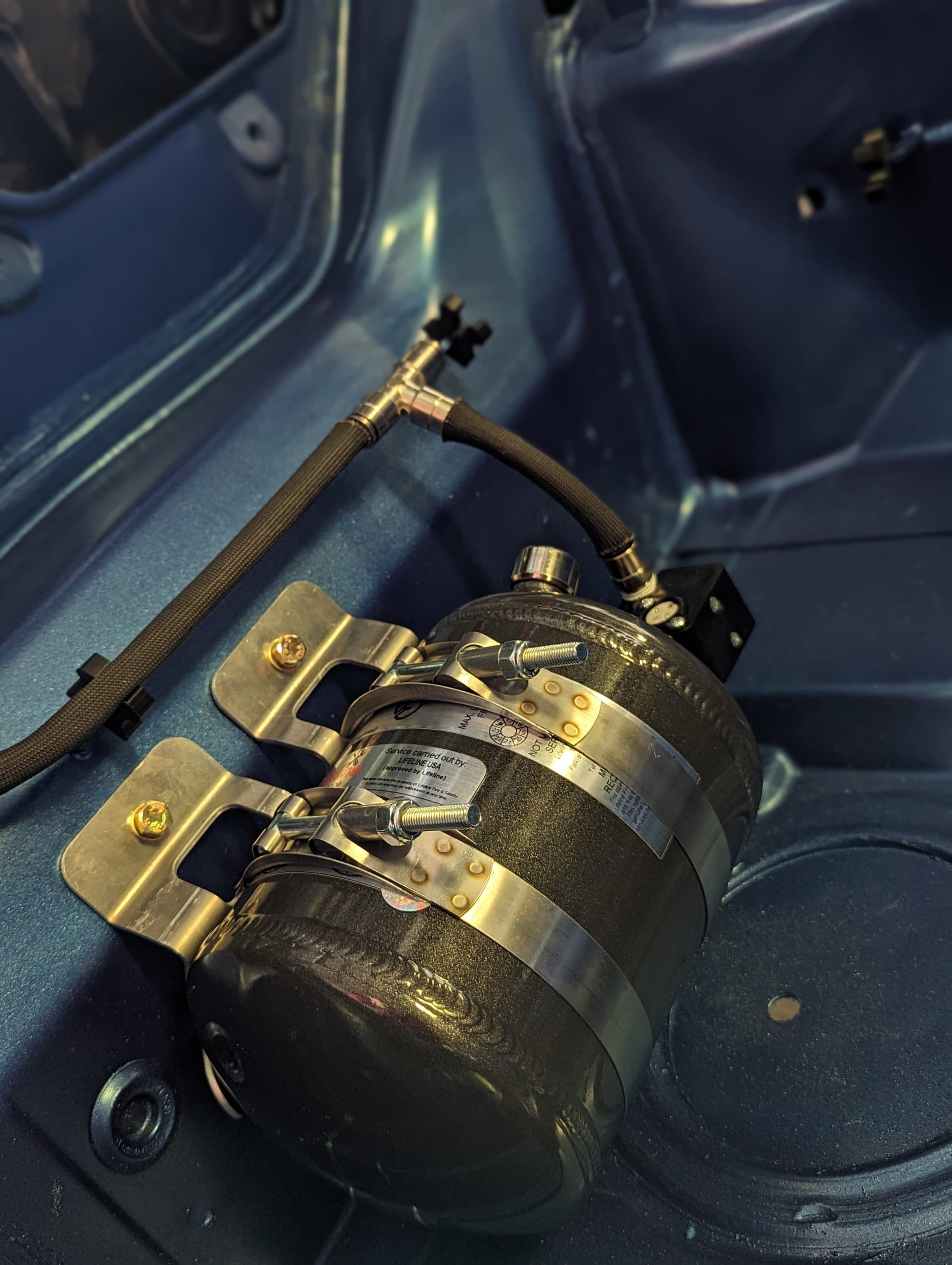
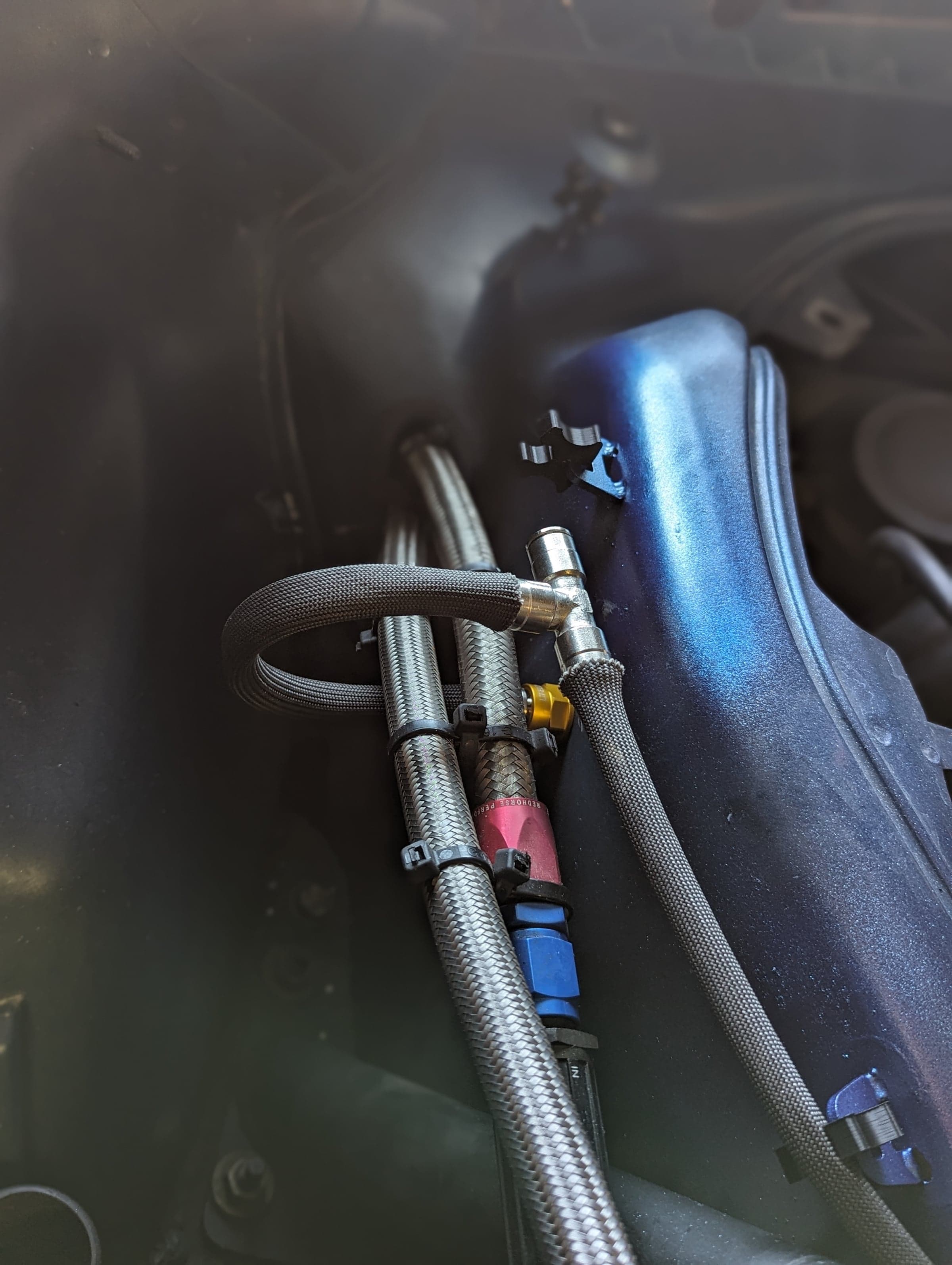
The Lifeline system got a complete new install.
The bottle was relocated, all new suppression tubing was run, and a new activation button was installed.
I also made a bracket that mounted the Lifeline control and the Cartek wireless equipment together.
It cleaned everything up and got rid of more components being randomly mounted wherever there happened to be room.
Making the Cockpit Better
There were also a bunch of smaller things that mostly came down to making the car nicer for Tom to actually drive.
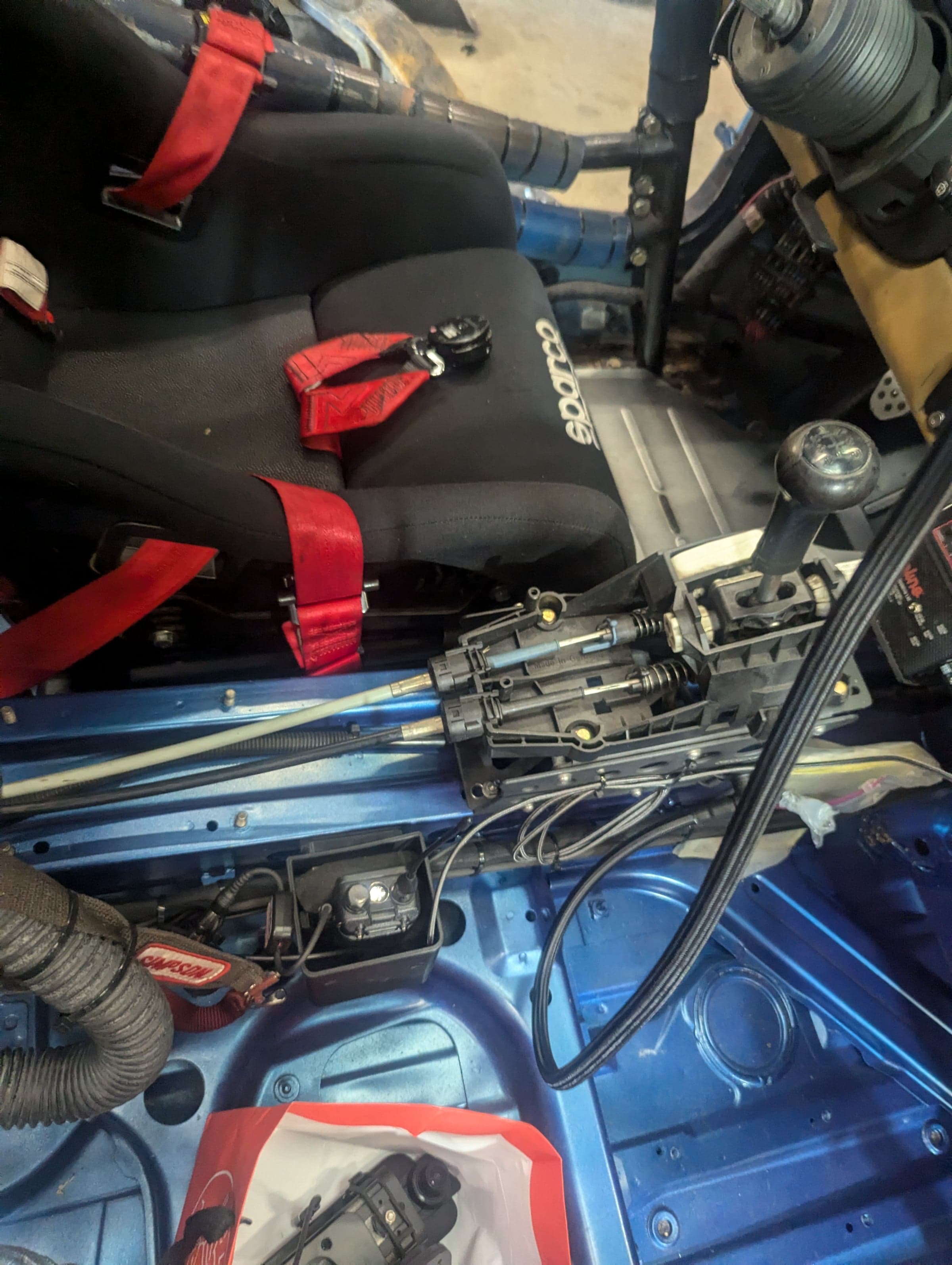
A shifter lift kit brought the shifter up into a better position.
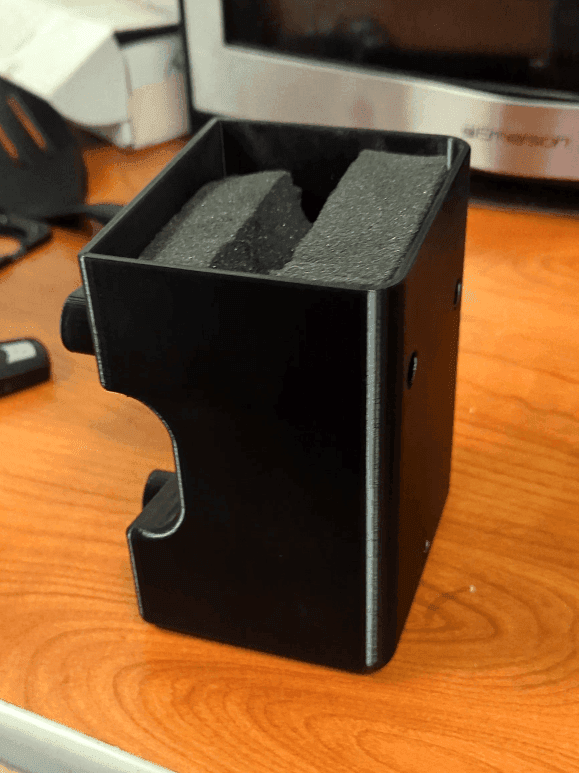
I designed and printed a new radio box, made mounts for the driver cooling fans, added a digital rearview mirror and moved the window net attachment.
The controls for the rain light, Accusump, transmission cooler, helmet fan and everything else that had been added to the car were also cleaned up and reorganized.
None of those things are huge by themselves, but when you're strapped into a race car you really notice when everything is where it should be.
Taking Weight Out
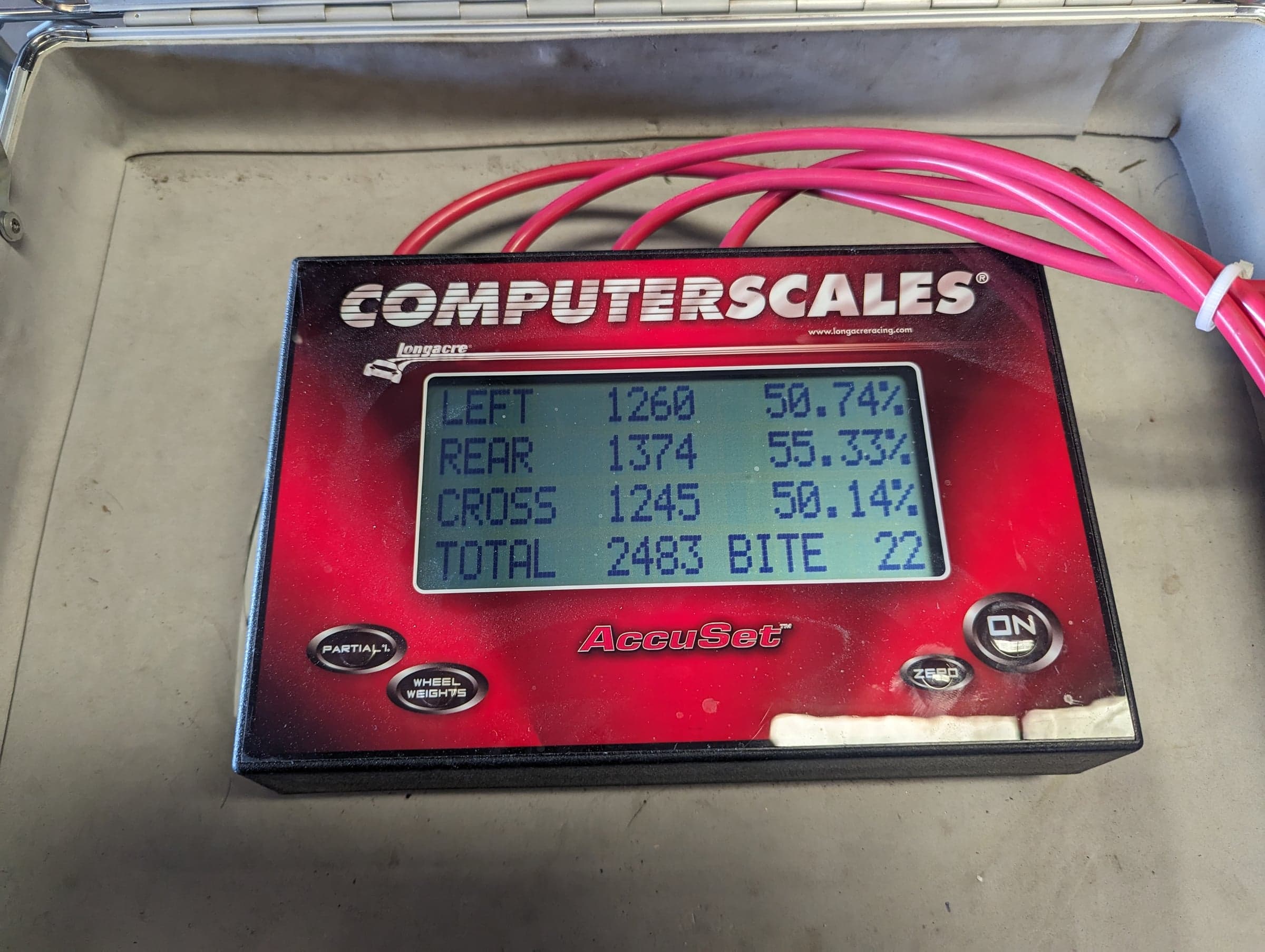
Quite a bit of time also went into removing things the car just didn't need.
There wasn't one giant weight-saving modification. It was mostly a lot of little stuff.
Old wiring, unnecessary brackets, bad mounts, extra hardware and random stuff that had accumulated over the years.
It's a Spec Boxster, so I wasn't trying to reinvent the car or turn it into something crazy.
The goal was really just to make what was already there work better.
Back on Track
The cool part was hearing from Tom after he got back out in the car.
He said he had a lot more confidence in it, which is probably one of the biggest improvements you can make to any race car.
Since then he's put the car on the podium several times.
He specifically mentioned the weight that came out of the car and just having more confidence in it as making a noticeable difference.
That's pretty much exactly what I wanted out of the build.
It wasn't about throwing a bunch of expensive parts at it just so I could say it was upgraded.
The things that needed fixing got fixed, a lot of years worth of questionable race car wiring and modifications came out, the cockpit got cleaned up, some weight came out, and the car became a lot easier to work on.
Now it's cleaner, lighter, easier to maintain, and Tom is putting it on the podium.
Can't complain about that.